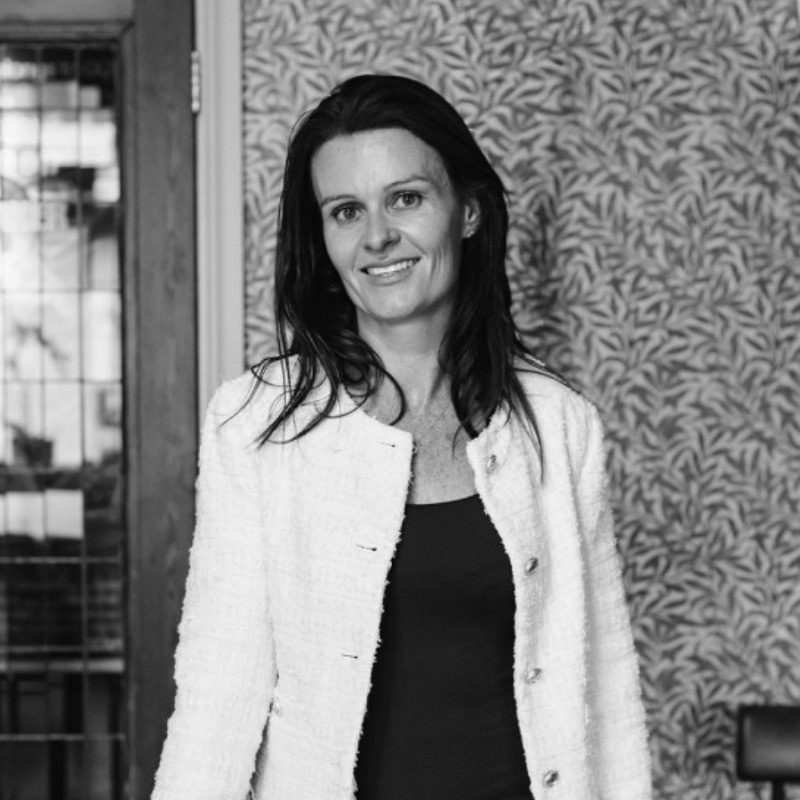
Alexis Goldfinch, a fractional General Counsel based in London, moderated the live session and explored the emergence of the fractional GC model and its implications for the legal profession. Goldfinch began her career at Freshfields, training as an IP and commercial lawyer, before undertaking several client secondments with organisations including Sony, Barclays, and PepsiCo. These experiences shaped her preference for in-house advisory work, where legal advice is embedded within commercial decision-making.
Her transition culminated in a role as Head of Legal at a growing consultancy, where she built a legal function from the ground up. In 2022, driven partly by personal considerations and broader shifts in working patterns, she moved into consultancy and ultimately evolved into a fractional general counsel, advising multiple scaling businesses as a strategic partner with legal expertise.
Defining the Fractional GC Role
Goldfinch described the fractional GC not simply as an outsourced lawyer, but as a strategic advisor embedded within leadership teams. Unlike traditional external counsel, the role involves ongoing engagement with the business, participation in leadership discussions, and a deep understanding of commercial drivers.
This model is particularly suited to scaling businesses that require senior legal expertise but lack the budget or need for a full-time general counsel. Typical triggers include rapid growth, increasing contractual complexity, rising external legal spend, and the burden of legal responsibilities falling on non-legal executives such as CFOs.
From Legal Expert to Business Advisor
A central theme was the need for lawyers to shift from technical specialists to commercially minded advisors. Goldfinch emphasised that legal expertise should be viewed as a foundation, not the entirety of the role. The most effective fractional GCs:
- Think like business people rather than purely legal technicians
- Focus on enabling growth, not just mitigating risk
- Demonstrate curiosity about business priorities and operations
- Ask probing, sometimes uncomfortable, questions to uncover real concerns
This approach contrasts with traditional private practice, where lawyers often operate within narrow scopes and rely on instructions rather than proactively exploring the business context.
Entrepreneurial Mindset and Building a Practice
Unlike law firm environments where work flows through institutional reputation, fractional GCs must actively build their own practices. Goldfinch highlighted the importance of:
- Maintaining and leveraging professional networks
- Enjoying relationship-building and client interaction
- Being comfortable with self-promotion and business development
This entrepreneurial dimension represents a significant cultural shift for many lawyers, who are not typically trained to operate as independent business developers.
Rethinking Pricing and Client Relationships
Goldfinch operates a fixed-fee subscription model rather than billing by the hour. This removes friction in client interactions, encouraging early engagement and frequent communication. Clients are more willing to seek advice proactively, reducing the risk of costly issues escalating.
The model also enables deeper integration into the business, including participation in leadership meetings and informal advisory conversations. This contrasts with the traditional billable hour, which can discourage openness and limit the lawyer’s visibility within the organisation.
Skills and Pathways into Fractional Roles
The discussion highlighted that transitioning directly from a highly specialised private practice role into a fractional GC position is challenging. A broad in-house background is typically essential, providing exposure to diverse legal and commercial issues.
Key capabilities include:
- Broad legal knowledge across multiple domains
- Strong commercial awareness
- Responsiveness and adaptability
- Confidence in ambiguous and fast-paced environments
Formal qualifications such as an MBA were not seen as necessary; practical experience, curiosity, and learning on the job were considered more valuable.
Market Trends and Future Outlook
The fractional GC model is gaining traction, particularly among scaling businesses and lawyers seeking flexible career paths. Growth has been driven by:
- Increased acceptance of flexible working post-pandemic
- Demand for cost-efficient access to senior expertise
- Shifting career priorities among legal professionals
While not suitable for everyone, particularly those uncomfortable with uncertainty or business development, the model offers variety, autonomy, and closer alignment with business strategy.
Conclusion
The session underscored a broader evolution in the legal profession: from reactive legal support to proactive, embedded business partnership. The fractional GC model exemplifies this shift, offering a flexible, commercially integrated alternative to traditional legal structures while challenging lawyers to rethink their roles, skillsets, and value propositions.
Clearly, there is a new opportunity within legal today.


